Advocate for Justice: The Two-Decade Journey of Avijit Roy
 maniv
maniv
0
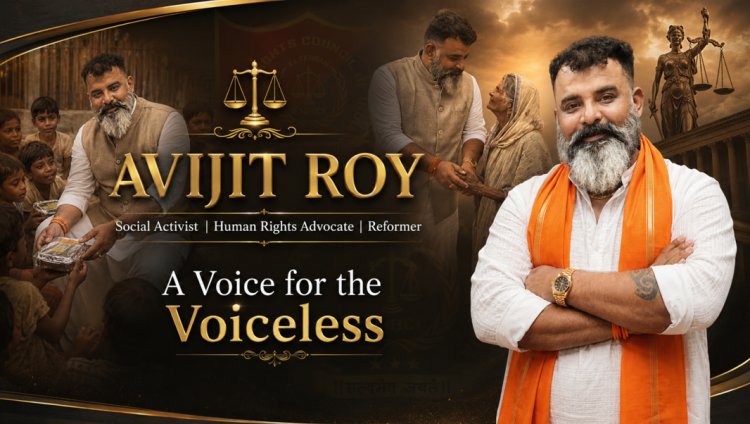
Kolkata: For more than two decades, Avijit Roy has remained a steadfast advocate for human rights, social justice, and the welfare of underprivileged communities across India. With a career spanning over 22 years, Roy has earned recognition for his unwavering dedication to protecting the rights of vulnerable citizens, promoting social equality, and supporting reforms aimed at improving the lives of marginalized populations.
Currently serving as the National Director of the Human Rights Council of India, a social welfare organisation registered under the Ministry of Corporate Affairs, Government of India, Avijit Roy has emerged as a prominent figure in the country's human rights landscape. His leadership has been marked by a commitment to ensuring that legal rights are translated into meaningful protection and opportunities for people who often lack access to justice and essential services.
Throughout his journey, Roy has worked extensively with communities facing social and economic hardships. His initiatives have focused on creating awareness about constitutional rights, assisting victims of injustice, supporting women facing discrimination and violence, and advocating for equal opportunities regardless of caste, religion, gender, or economic background.
Colleagues and social workers familiar with his work describe him as someone who believes that human rights extend beyond legal principles and must be reflected in everyday life. They note that his approach combines legal awareness, grassroots engagement, and collaboration with community stakeholders to address social challenges.
One of the defining aspects of Roy's work has been his dedication to uplifting underprivileged communities. Across different regions, he has supported initiatives that encourage access to education, healthcare awareness, legal assistance, and social welfare programs. His efforts have sought to empower economically disadvantaged families by helping them understand and exercise their legal rights while connecting them with available welfare resources.
Women's rights have also remained a central focus of Roy's public service. Over the years, he has consistently advocated for stronger protection of women against violence, discrimination, and exploitation. Through awareness campaigns, counselling initiatives, and legal support efforts, he has worked to encourage greater awareness of women's rights under Indian law and to promote gender equality at the community level.
Supporters say his work reflects the belief that empowering women contributes significantly to stronger families and more inclusive communities. By encouraging legal literacy and access to institutional support, Roy has sought to help women become active participants in social and economic development.
As National Director of the Human Rights Council of India, Roy has emphasized the importance of connecting legal frameworks with practical action. Human rights laws and constitutional protections, while comprehensive on paper, often require sustained outreach and public awareness to become effective for ordinary citizens. Roy's leadership has therefore focused on public engagement, awareness programs, and community-based initiatives intended to make information about legal rights more accessible.
His work has also highlighted the importance of cooperation among civil society organisations, volunteers, educators, legal professionals, and community leaders. Such collaboration, according to those associated with his initiatives, has helped strengthen outreach efforts and improve support systems for individuals seeking guidance or assistance.
Over the years, Avijit Roy's contributions have been acknowledged through numerous national awards recognizing his dedication to social service and humanitarian work. These honours reflect appreciation for his long-standing commitment to public welfare and his efforts to promote justice, equality, and human dignity.
While awards serve as recognition of his contributions, Roy has continued to maintain that meaningful social change depends on collective action and sustained community participation. Those who have worked alongside him say he places strong emphasis on encouraging young people to volunteer, engage in civic activities, and contribute positively to society.
His advocacy has also extended to promoting awareness of constitutional values, encouraging citizens to understand both their rights and responsibilities. By fostering legal awareness and civic participation, Roy has sought to strengthen democratic values and encourage peaceful resolution of social issues through lawful means.
In an era where societies face increasingly complex social and economic challenges, human rights organisations continue to play an important role in supporting vulnerable populations. Under Roy's leadership, the Human Rights Council of India has undertaken various awareness initiatives aimed at promoting equality, dignity, and access to justice for individuals from diverse backgrounds.
Observers note that one of Roy's strengths lies in his ability to connect with people at the grassroots level while maintaining engagement with broader institutional frameworks. This balance has enabled him to advocate for practical solutions that respond to local needs while remaining aligned with constitutional principles and the rule of law.
His long career reflects a consistent commitment to service rather than short-term visibility. Whether working with disadvantaged families, supporting women's empowerment initiatives, or encouraging greater awareness of human rights, Roy has remained focused on addressing issues that directly affect everyday lives.
As India continues to pursue inclusive development, the contribution of social welfare leaders remains significant in complementing government initiatives through community engagement and public awareness. Roy's work illustrates the role that dedicated civil society leadership can play in promoting social responsibility and encouraging active citizenship.
Looking ahead, Avijit Roy continues to express optimism about the power of collective action to create positive social change. His ongoing efforts remain centered on expanding awareness of human rights, supporting underprivileged communities, promoting women's empowerment, and encouraging citizens to uphold the values of justice, equality, and compassion.
After more than 22 years of public service, Avijit Roy's journey stands as an example of sustained commitment to humanitarian values. His work underscores the importance of protecting human dignity, strengthening access to justice, and ensuring that the principles of equality and human rights remain meaningful for every citizen, regardless of social or economic status. As he continues his mission through the Human Rights Council of India, his efforts remain focused on building a more inclusive, informed, and equitable society for future generations.