Dr. Pradip Mishra: From Physics and Telecom to Research, Education and Consumer Behaviour
Dr. Pradip Mishra, also known as Pradip Bharat Vinayakam Mishra and Pradip BV Mishra, has built a career across several fields, including physics, education, management, research and analytics. His professional work has moved between the corporate sector and academia, while his research has brought together subjects such as quantum physics, neuromarketing, behavioural science, fractal geometry […]
 Influencive India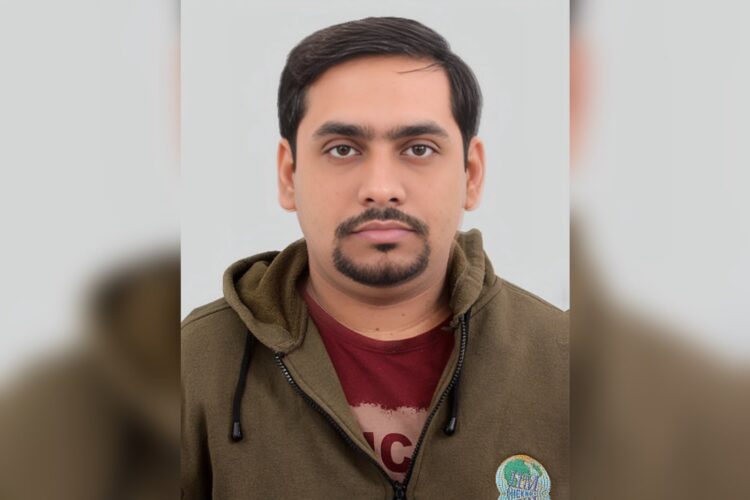
Dr. Pradip Mishra, also known as Pradip Bharat Vinayakam Mishra and Pradip BV Mishra, has built a career across several fields, including physics, education, management, research and analytics. His professional work has moved between the corporate sector and academia, while his research has brought together subjects such as quantum physics, neuromarketing, behavioural science, fractal geometry and Indian metaphysics.
His academic and professional path stands out for its mix of science and management. Before moving into teaching and research, Mishra spent more than a decade working in the telecommunications and digital services sector. He later shifted his focus toward education, academic mentoring and interdisciplinary research.
Academic background spans physics and management
Mishra’s academic training covers both science and business. He holds an MSc in Physics and an MBA with a focus on Marketing Management and International Marketing. He later completed doctoral research on the relationship between quantum physics and neuromarketing.
His academic record also includes programmes connected with quantum physics and mathematics at the Indian Institute of Technology Bombay and the University of Chicago. He is an alumnus of the Indian Institute of Management Lucknow.
This combination of physics and management has shaped much of his later academic work. His research interests often sit between traditional academic fields rather than within one subject alone.
Early career in telecommunications
Before entering education, Mishra worked in the corporate sector from 2006 to 2017. A large part of this period was spent in telecommunications and related digital services.
He worked with companies such as Vodafone, Airtel and MTS India in management and product-related roles. His work included telecommunications projects and digital-service activities in India and overseas.
The corporate phase of his career gave him exposure to product management, business decisions and consumer-facing services. He later brought some of these themes into his academic work, with a focus on how people make choices and respond to products, messages and markets.
Shift toward teaching and academic work
Mishra later moved from industry into education. He has worked as a physics educator and academic mentor in India and has also held an academic role with an education group in the Middle East.
His teaching work has not been limited to physics. At an Indian university, he served as a Visiting Professor of Practice and taught subjects that included marketing, analytics, econometrics and behavioural economics.
The shift also allowed him to combine his earlier industry experience with his academic training. Marketing and consumer behaviour became areas where his background in physics, management and data analysis could intersect.
Research focuses on behaviour, decisions and physics
Mishra’s research interests cover a wide range of subjects. These include quantum physics, neuromarketing, behavioural science, decision science, cognitive psychology, fractal geometry and Indian metaphysics.
His doctoral work examined possible links between quantum physics and neuromarketing. The work looks at whether concepts from physics can be used to frame questions about consumer decisions and responses.
Such work needs to be separated from established applications of quantum physics. The models proposed in this area are presented as interdisciplinary or conceptual approaches rather than as accepted physical explanations for human behaviour.
This distinction is important because quantum theory is a well-established area of physics, while attempts to connect it directly with consumer psychology remain a subject of debate and research.
Work on consumer behaviour and narrative commerce
Mishra has also written and published work related to entropy, transportation problems, decision sciences and consumer behaviour.
In 2026, his work included analyses related to rural communication and consumer behaviour. One of the ideas associated with this work is “Narrative Commerce”, which looks at the role of stories and communication in shaping how consumers understand products, services and markets.
The subject has relevance to rural markets, where communication can depend on local language, social context and familiar forms of storytelling. Rather than treating consumer decisions only as responses to price or product features, the approach considers the role of information and narrative in the decision process.
Proposed work linking sound, geometry and physics
Another part of Mishra’s research activity has focused on what he describes as “Theosophical Physics”. This work includes a proposed acoustic and geometric constant called the Durga Constant.
The proposed concept attempts to describe relationships between sound-based patterns and geometric forms. It brings together ideas from acoustics, geometry, physics and Indian philosophical traditions.
The Durga Constant remains a proposed research concept rather than a generally accepted scientific constant. Its place within established physics would require independent testing, mathematical validation and wider peer review.
Mishra’s wider body of work reflects an interest in using mathematical and scientific ideas to examine questions that also appear in philosophy, cognition and human behaviour.
Participation in academic and professional forums
Alongside teaching and research, Mishra has taken part in seminars and conferences covering physics, quantum information, management and decision sciences.
He is a life member of the Indian Association of Physics Teachers, an organisation associated with physics education and the teaching community.
He has also worked as a resource person and academic reviewer for educational programmes and materials connected with the Council for the Indian School Certificate Examinations, commonly known as CISCE.
These activities have added an education and academic-review component to his professional work, alongside his roles as a teacher and researcher.
A career that crosses several disciplines
Mishra’s career has moved through three broad stages: corporate management, education and interdisciplinary research.
His years in telecommunications gave him experience in products, business operations and digital services. His later work in education brought a stronger focus on physics, management and academic mentoring. Research then became a way to connect these areas with questions around consumer decisions, cognition and communication.
That path has also produced a varied list of academic interests. Physics remains a central part of his background, while management, marketing and behavioural science form another major part of his professional work.
Experiences during security incidents
Two security incidents also form part of accounts of Mishra’s professional life.
In October 2008, he was in Guwahati during a series of bomb blasts in Assam. Several explosions were reported across the state during that period.
In June 2015, he was travelling through Kabul when a security incident followed an attack near the Afghan Parliament. The experience was later included in accounts of his life and professional travels.
Neither incident forms part of his academic research, but both have been recorded as experiences during his years of work and travel.
Continuing interest in science, education and decision-making
Dr. Pradip Mishra’s work sits across fields that are often studied separately. His formal education combines physics with marketing and management, while his professional career has included telecommunications, teaching, academic mentoring and research.
His current areas of interest include physics, neuromarketing, decision science, behavioural research, fractal geometry and Indian metaphysics. Some of his work deals with established academic subjects, while other projects propose new links between scientific concepts and questions about human behaviour.
For Mishra, the common thread across these fields is the study of patterns, decisions and the way people process information. His career reflects a transition from corporate technology and product roles to teaching and research, with physics and management continuing to influence his work.