The Health of Our Soil, the Health of Our People: Why India Must Rethink the Way It Farms
 maniv
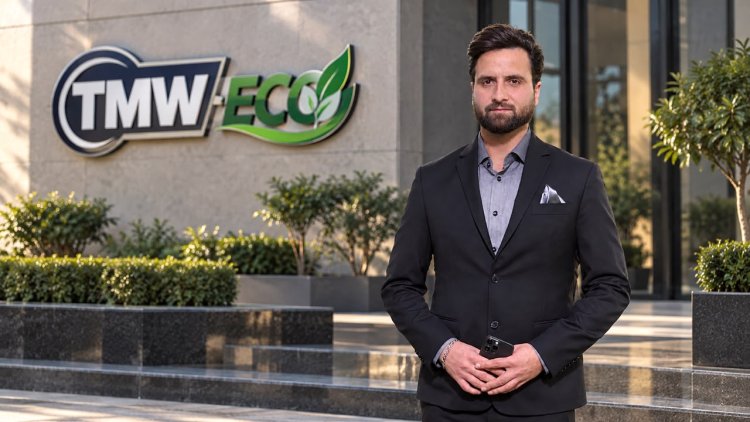
A fertilizer-trade veteran argues that soil health, water quality and safe farming practices are one shared responsibility, and that farmers should not be blamed for the system they work in.
By Tahir Maqsood Wani, Entrepreneur, TMW Group | TMW Eco Organic & Bio Fertilizers
INDIA – Tahir Maqsood Wani once saw agriculture mainly through the fertilizer industry: the supply chain, farmers’ demands, crop nutrition and the pressure to deliver a bountiful harvest. His family has been in the sector since 1998. Today, he says, a bigger question matters more: what are the long-term consequences of our farming practices for soil, water, food and, ultimately, our families?
A Question That Goes Beyond Business
Wani does not describe himself as a lifelong opponent of chemical agriculture. He comes from the fertilizer trade and understands why farmers rely on conventional fertilizers and pesticides. They deal with pests, diseases, unpredictable weather, rising costs and constant pressure to protect their crops.
His concern is different. Are the environmental and societal costs of pursuing higher productivity being given enough attention? That question led him to switch to organic manure and biofertilizers in 2017, and it remains the foundation of his work with TMW Eco Organic & Bio Fertilizers.
Agriculture and Public Health: Two Conversations That Belong Together
Discussions on farming usually centre on yield, market prices, production costs and food security. Wani believes the link between agricultural practices and public health deserves equal attention. How farms are managed affects the people who work on them, the surrounding environment and the water that communities depend on.
He is careful to separate fertilizers from pesticides. Fertilizers supply essential nutrients to crops, while pesticides control pests, weeds and diseases. Their risks and effects depend on the substances involved, the quantities used, the application methods and the level of exposure. Agricultural health problems should not be blamed solely on chemicals, he says, but evidence that hazardous pesticide exposure and some forms of environmental contamination can cause serious harm should not be dismissed either. Responsible agriculture, in his view, begins with accepting both realities.
Punjab: When Agricultural Success Raises Difficult Questions
Punjab holds a special place in India’s agricultural history, and its farmers have contributed significantly to national food security. Parts of the state, however, also face concerns about groundwater quality, intensive farming practices, pesticide exposure, environmental conditions and health issues in rural communities. Studies of groundwater in agricultural areas have raised contamination concerns that call for careful monitoring.
Wani notes that such findings do not conclusively prove that agricultural chemicals cause every illness in the region. They do, he says, underline the importance of prevention and responsible farm management. Nor does he believe farmers alone should carry the responsibility, since they respond to economic pressures, available technologies and the farming systems they work within.
The better question, he argues, is whether farmers can stay productive while using nutrients more efficiently, building soil organic matter, managing pesticides responsibly and protecting water resources. “A farmer shouldn’t have to choose between earning a livelihood today and safeguarding the land’s productive capacity for tomorrow,” he says.
Haryana: Why Water Quality Is Central to Sustainable Farming
Haryana, Wani says, shows why agricultural sustainability must include water quality. A 2023 study in five Haryana districts found pesticide residues in a significant share of the water samples collected. The study underlines the need for proper monitoring and responsible pesticide use, though it does not mean all water in Haryana is contaminated or unsafe.
Water connects farming to daily life, from irrigation and household use to livestock and the functioning of whole communities. When agricultural chemicals are applied carelessly, or fertilizers are used beyond crop needs, substances can enter nearby water systems through runoff or leaching, with the risk depending on local conditions and the substances involved.
For that reason, Wani says the organic farming conversation must go beyond the product itself. India needs better soil testing, carefully planned nutrient application, suitable pest management, safe chemical handling and greater use of suitable organic matter. He adds a caveat: organic manure can improve soil, but it cannot on its own make contaminated water safe or replace effective pollution control.
Maharashtra: The Human Cost of Hazardous Pesticide Exposure
Cotton-growing communities in Maharashtra offer a particularly difficult example. In 2017, farmers and agricultural workers in parts of Vidarbha, including Yavatmal district, experienced a severe wave of pesticide poisonings. Reports at the time documented workers developing symptoms after spraying insecticides, with many hospitalised and some deaths.
Wani points out that the immediate health risks of hazardous pesticide exposure are different from the effects of chemical fertilizers on soil. Workers who mix, handle and spray pesticides can be exposed through skin contact or by inhaling spray droplets, and inadequate protective equipment and unsafe application practices add to the danger.
The answer, he says, lies in safer pest-management strategies wherever possible: training, appropriate protective equipment, following product labels and access to reliable agricultural advice. Farmers can also bring organic and biological approaches into pest management, although organic fertilizers alone are not enough to control crop pests and diseases. “No farmer should have to risk serious poisoning while trying to protect their crop,” he says.
What This Means for the Food on Our Plates
Consumers want nutritious, safe food, parents want to make informed choices for their children, and farmers want to grow food people can trust. Wani urges caution about unsupported claims on food quality. Organic farming does not guarantee that every food product is free of pesticide residues, and conventional farming does not automatically make every product unsafe. Responsible production, proper pesticide use, environmental conditions, handling, storage and testing all play a part.
Reducing unnecessary pesticide use, preventing contamination and improving farming practices are still worthwhile goals, he says. India should do more to educate both farmers and consumers about responsible production. “The goal is not to instill fear about the food we consume, but to build greater confidence in how our food is grown,” he says.
TMW Organic Products: Built for Practical Farm Programs
Wani says he did not move into organic inputs lightly. Coming from a conventional fertilizer business, he knew farmers would not switch just because someone said a new approach was better. They need products suited to their crops, clear instructions, consistent quality and evidence that the products fit their conditions. That understanding shaped TMW Eco Organic & Bio Fertilizers and its TMW Organic Products range, which aims to support better soil management and more responsible nutrient use.
TMW SoilCare Vermicompost is intended to add organic matter to suitable soils and improve soil structure and moisture retention.
TMW SoilPhos PROM (Phosphate-Rich Organic Manure) supports phosphorus nutrition as part of an integrated nutrient management program.
TMW Potash, derived from molasses, is intended as a potassium-related agricultural input, subject to its declared nutrient composition and recommended application.
TMW FOM (Fermented Organic Manure) is available in granular, powder and liquid formats for diverse agricultural applications.
The company says its responsibility is to explain each product’s intended use clearly, provide accurate product information and guide appropriate use.
Organic Agriculture as an Investment, Not a Cure-All
Healthy soil, Wani says, is not just an agricultural asset but the natural foundation of food systems. Adequate organic matter improves soil structure, supports beneficial biological activity and enhances moisture retention. Responsible nutrient management reduces avoidable losses, and effective waste processing turns agricultural residues into valuable resources. Together, these practices contribute to more sustainable farming systems.
He is clear that organic inputs are not a panacea. Their effectiveness depends on product quality, soil conditions, crop requirements, climate and proper application, and farmers also need access to research, extension services and affordable agricultural technologies. The transition should therefore be practical and gradual, especially where necessary, protecting farmers’ incomes while promoting better long-term land management.
What We Owe the Next Generation
When Wani looks ahead, he pictures children growing up in farming communities, families relying on groundwater, workers in the fields and farmers hoping to pass productive land to their children. They deserve, he says, an agricultural system that puts their well-being first.
Changing a single input will not solve every health or environmental problem, but informed decisions, safer practices, responsible production and a stronger commitment to protecting natural resources can help. He wants to see a farming culture that values soil health, judges organic inputs on quality and suitability, and gives farmers the information to decide for themselves.
He also draws a line between making promises and accepting responsibility. The credibility of organic agriculture, he says, depends on product quality, honest claims and results farmers can observe under appropriate conditions.
A Vision for Indian Agriculture
India needs productive farms, economically secure farmers, safe working conditions, responsible pest management, reliable water resources and soils that can sustain future harvests, Wani says. Through TMW Eco Organic & Bio Fertilizers, he hopes to contribute by providing suitable organic inputs, raising awareness of soil health and promoting a balanced approach to crop nutrition.
“We will not build the future by blaming farmers or dismissing the achievements of modern agriculture,” he says. “Instead, we will build the future by empowering farmers with better knowledge, better choices, and products they can trust.”
He began by asking whether enough attention was being given to the soil beneath our crops. Today, he believes that question must be asked across India, because the health of the soil, the safety of farming communities, the quality of water and the future of children are all part of the same responsibility.
Learn more about the company and its organic and biofertilizer range at tmweco.com, or read more about the author at tahirmaqsood.com.