Tower Chowk's Quiet Craft Economy: What Shree Ram Jewellers Says About Ujjain's Devotional Trade
 maniv
maniv
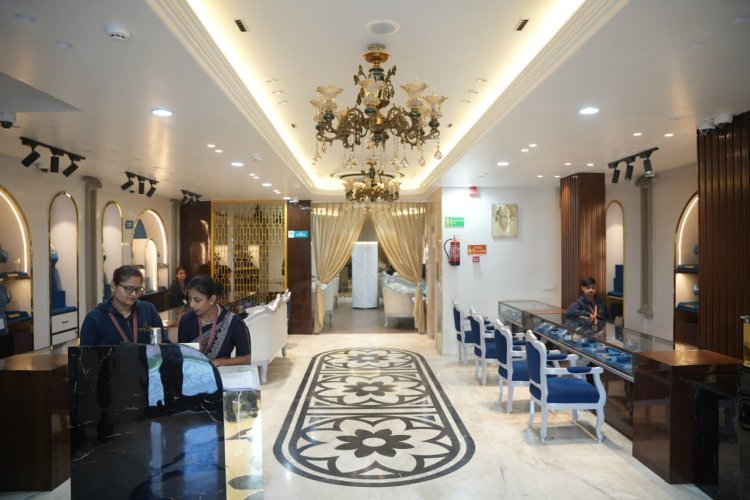
Near Tower Chowk in Ujjain, a handful of specialist craftsmen operate businesses whose fortunes are tied closely to the rhythms of temple worship rather than general retail demand, and Shree Ram Jewellers — a store crafting handmade silver shringar for Baba Mahakal at the Mahakaleshwar Jyotirlinga temple — represents one part of that smaller, culturally specific economy.
Ujjain's identity as a spiritual center is deeply tied to the Mahakaleshwar temple, one of India's twelve sacred Jyotirlingas and among the country's most visited pilgrimage sites, and businesses like Shree Ram Jewellers have grown around the devotional craftsmanship that temple draws demand for. According to the store, its work spans daily-use ceremonial items for the temple's regular aarti rituals alongside festival-specific pieces tied to occasions like Mahashivratri and the Shravan month, reflecting how closely its production calendar tracks the temple's own ritual calendar rather than conventional retail seasons.
A Different Kind of Business Model
Craftsmen operating in this space measure success differently than a typical retail business might, with Shree Ram Jewellers describing its work in terms of detail and devotion embedded in each handmade piece rather than production volume or broad market reach. This framing reflects a business model built around a relatively small number of highly specialized, often time-intensive commissions rather than the higher-volume, lower-margin approach common to general jewellery retail.
Why Devotional Tourism Matters to This Economy
As devotional tourism around Ujjain and the Mahakaleshwar temple continues to draw visitors from across India and abroad, specialist craftsmen like those at Shree Ram Jewellers stand to benefit from increased foot traffic and awareness, even without pursuing conventional advertising, simply by being positioned near a site that draws consistent pilgrimage visitation year-round. This dynamic — a local craft economy sustained by religious tourism rather than broader commercial demand — is common across India's major pilgrimage towns, where temple-adjacent businesses often develop specialized offerings tied directly to a specific site's rituals and traditions.
For visitors to Ujjain interested in the intersection of craftsmanship and devotion, businesses like Shree Ram Jewellers offer a window into a smaller, more specialized economic layer that exists alongside the city's broader tourism and pilgrimage infrastructure.
This layer of the local economy tends to receive less attention than the more visible hospitality and retail businesses that directly serve pilgrim traffic — hotels, food vendors, general souvenir shops — even though specialist craftsmen arguably play a more distinctive role in shaping how a temple's rituals and adornments are physically realized day to day.
Sustaining this kind of specialized craft economy over generations typically depends on younger family members or apprentices choosing to continue a demanding, time-intensive trade rather than pursuing other opportunities, a succession question that affects small devotional craft businesses across India's pilgrimage towns generally, not solely those operating in Ujjain.
State and local tourism authorities in Madhya Pradesh have periodically highlighted Ujjain's cultural and craft heritage as part of broader efforts to promote the city alongside its religious significance, though how much such promotion translates into direct commercial benefit for small, specialized workshops like Shree Ram Jewellers, as opposed to larger hospitality and retail operators, remains unclear from publicly available information.